




 English
 Español
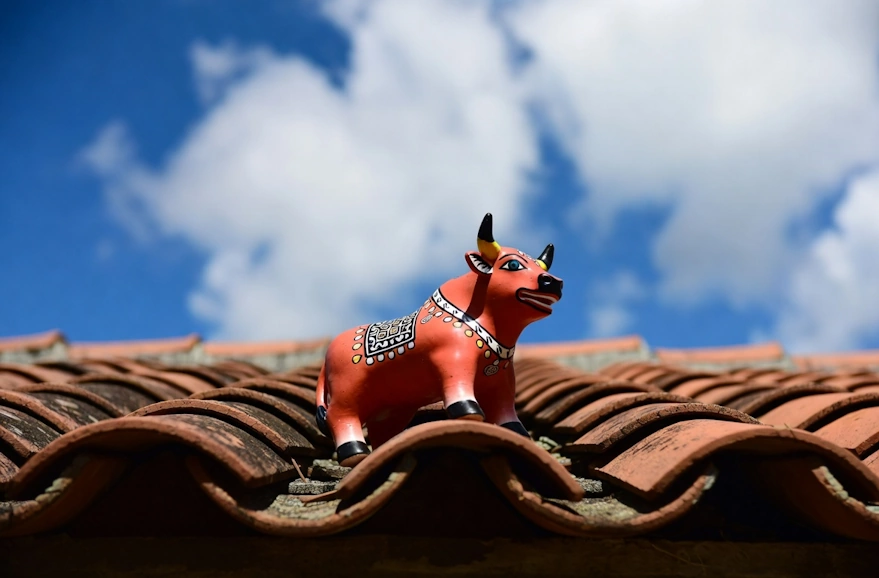
You notice them up on a roof in a hushed highland settlement, a duo of pottery bulls fixed in place with crazy eyes and tongues dangling like they caught the punchline to a private gag. Toritos de pucara pull you in that way, these quirky ceramic figures that look half beast, half party guest. They perch there, painted in stripes of red and yellow, promising something more than just decoration.
Hang on through this ramble, though. You will get the history laid out with a timeline that ties pre-Inca roots to colonial twists, unpack what toritos de pucara mean in daily rituals, trace where toritos de pucara come from, and see what toritos de pucara are for beyond luck charms. We will even dip into colors that carry their own whispers and the magic of handmade torito de pucara pieces that no two match.
Unpacking the History of Toritos de Pucara
The roots of toritos de pucara sink deep into the soil of southern Peru, where clay has always whispered stories. Centuries before any Spanish soldier marched in, locals in the Andes fashioned creatures from mud to salute Pachamama, the earth mother who doled out gifts and exacted costs in equal parts. Bulls were not from these parts, no doubt, yet the thought of powerful animals standing guard over houses rang true with those old llama figures etched by the Tiwanaku people near Lake Titicaca. Once the Spanish conquerors rolled in during the 1530s, they shipped cattle over the ocean, and all of a sudden, bulls were prancing through celebrations, changing quiet sacred spaces into rowdy, dust filled bullrings.
Local potters, those clever Chepa Pupuja families from nearby Checa, saw opportunity. They molded the new animal in clay, blending it with old symbols to sneak protection past the eyes.
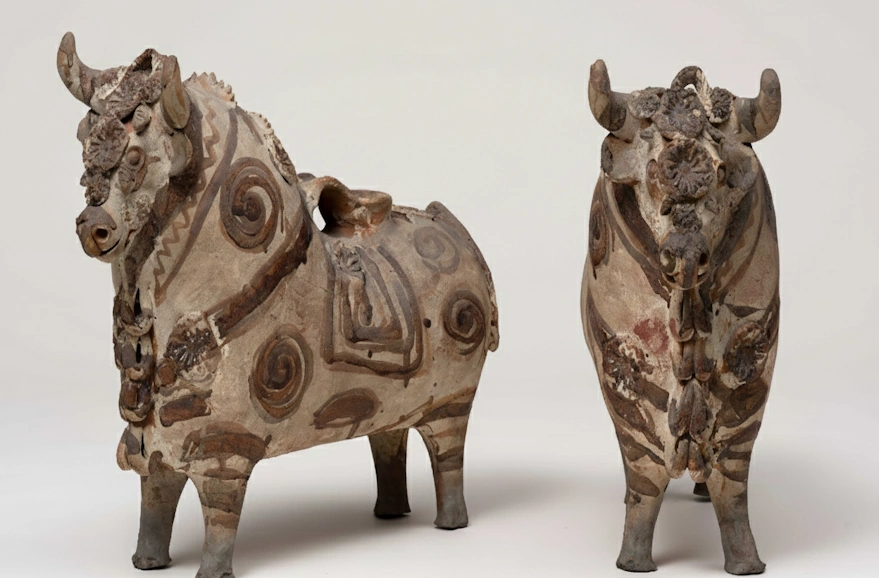
By the 1700s, these figures had evolved, no longer just toys for fiestas but talismans for drought plagued farms. A legend persists from those lean years, one farmer dragging his bull up a sheer rock face as sacrifice to Pachakamaq, the creator god. The beast rubs against stone, horns piercing deep, and water gushes out, flooding fields with life. Potters etched that tale into spirals on the bulls’ backs, a reminder that desperation births miracles. Today, workshops hum with the same wheel turns, but global tourists carry them home, turning local lore into worldwide whispers.
To follow this thread more closely, here is a timeline drawn from archaeological digs and colonial ledgers, marking how toritos de pucara shifted from myth to mainstay:
Pre 1532 | Andean ceramics honor animals like llamas; Tiwanaku influences shape protective figures near Titicaca (Chavez, 1985). |
1532-1700 | Spanish introduce bulls to festivals; Chepa Pupuja potters in Checa adapt designs for colonial markets (Rostworowski, 1988). |
1700-1800 | Drought legends fuel symbolism; pairs with crosses appear on roofs for duality and faith (Bingham, 1913/1979). |
1800-1900 | Railway at Pucara boosts sales; name sticks as artisans flock to the station (Valencia, 2010). |
1900-present | Revival in Cusco and Ayacucho; handmade pieces blend tradition with tourist flair (Isbell, 1978). |
Where Toritos de Pucara Come from and What They Mean
You follow where toritos de pucara come from, and the path points directly to Pucará, that windswept plateau spot roughly 100 kilometers north of Lake Titicaca in Puno’s region. It is not the village proper, though, but the former train station there, alive in the early 1900s with merchants bargaining over pottery. The true creators live in Checa, a drowsy little settlement where the Chepa Pupuja clans have tended kilns for ages. They trek to Pucara station with baskets of fresh molded bulls, selling to miners and merchants passing through. That is how the name latched on, a shortcut born of dust and deals.
Dig into what toritos de pucara mean, and layers peel back like onion skin. At heart, they stand for Andean duality, male and female energies locking horns to birth balance, much like Yin meets Yang on a rooftop. Wide eyes mean stay vigilant, watch your step in this world and the next. The lolling tongue? Harness your words, let them heal not harm. links raw instincts to loftier ideas, a playful wink at reining in your inner wild side. Placed in pairs flanking a cross, they ward off storms, envy, bad luck, folding Catholic icons into indigenous spells.
Families swear by them, too. A new house gets its first pair before the roof tiles settle, or a wedding bed hides one under pillows for fertile nights. It is uneven magic, sometimes colliding with modern skepticism, yet the pull endures, especially when thunder rolls over the altiplano.
The Colors and Craft of Handmade Torito de Pucara
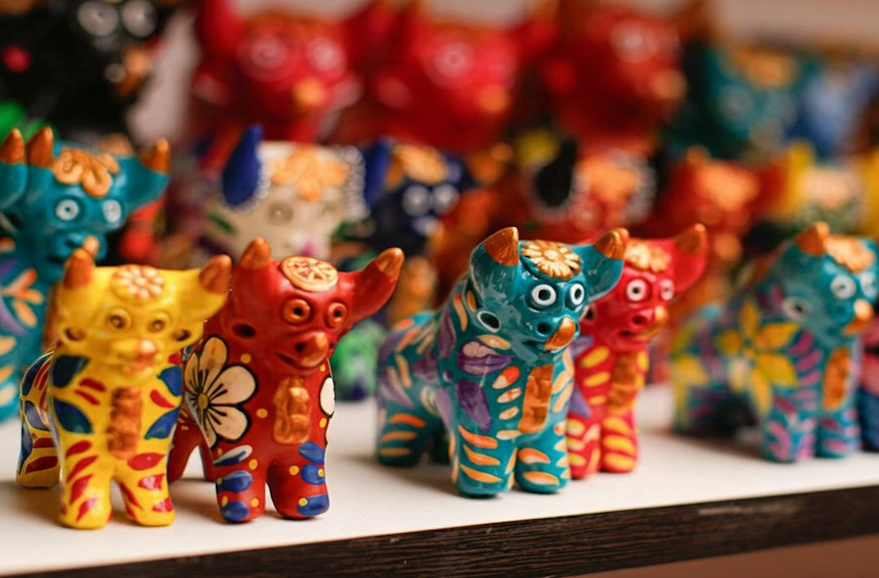
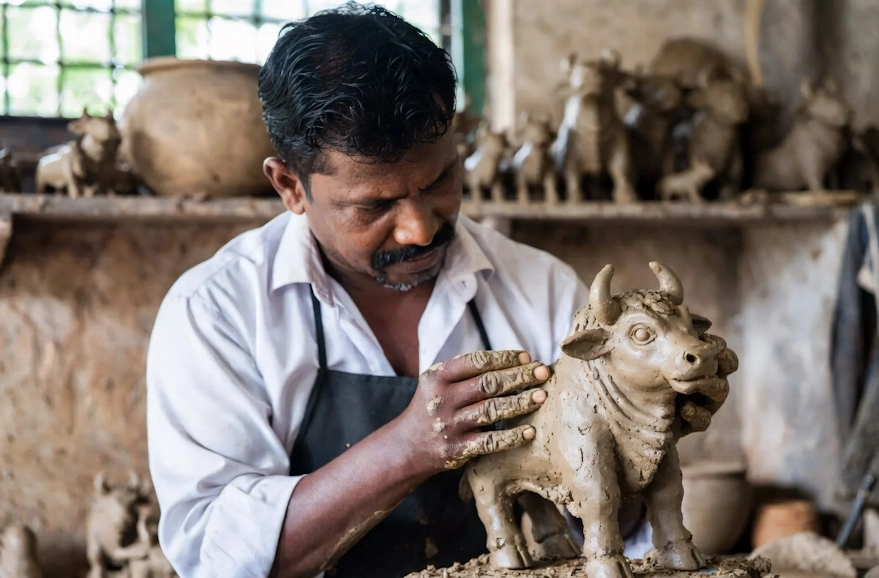
Crafting a handmade torito de pucara starts raw, clay from Titicaca banks kneaded soft under callused palms. You coil it, shape horns curling proud, eyes bulging alert. Dry it slow in shade, then fire in wood kilns that belch smoke like ancient dragons. Painting comes last, brushes of horsehair dipping into pigments ground from minerals and plants, strokes freehand and fierce. No two emerge identical, a quirk where one bulls spots lean geometric, another’s floral frenzy. Artisans in Checa still hum old songs as they work, passing brushes to kids who add their wobbles.
Color | Meaning in Toritos de Pucara |
Red | Protection and love for the home |
White | Purity and clear intentions |
Yellow | Abundance, joy, vital energy |
Blue | Tranquility, wisdom, spiritual calm |
Black | Grounding, absorbing negativity |
Multicolor | Versatile blessings, all around good fortune |
It is that personal touch, the uneven glaze or off kilter horn, that makes what toritos de pucara are for feel alive, not just lore.
You walk away from toritos de pucara seeing Peru a touch clearer, those little bulls bridging dusty myths to rooftop realities. They remind you how traditions twist through time, clay holding steady amid change. Next time you pass a highland home, glance up, wave at the guardians. Who knows, one might just tip its horn back.
Frequently Asked Questions
What do toritos de pucara mean exactly?
They embody protection, fertility, and balance, representing Andean duality where opposites like good and evil fuse for harmony in homes.
Where do toritos de pucara come from originally?
From the Chepa Pupuja artisans in Checa village, but named after Pucara railway station in Puno where they sold them, about 100 km north of Lake Titicaca.
What are toritos de pucara used for in daily life?
Placed on roofs or inside homes to guard against misfortune, bless marriages, and invite prosperity, often in pairs with a cross for added spiritual weight.
Why do colors matter on handmade torito de pucara?
Each hue carries intent, like red for shielding love or yellow for joyful abundance, letting families pick what their household needs most.
References
Bingham, H. (1979). Across South America: An account of a journey from Buenos Aires to Lima by way of Potosí and the Bolivian cities (Original work published 1913). Books for Libraries Press.
Chavez, S. (1985). Peruvian ceramics from the collections of the American Museum of Natural History. American Museum of Natural History.
Isbell, W. H. (1978). The pre-Columbian pottery of the Pucara culture. University of Minnesota.
Rostworowski, M. (1988). Estructuras andinas del poder: Ideología religiosa y política. Instituto de Estudios Peruanos.
Rowe, J. H. (1953). The Incas under Spanish rule. In J. H. Steward (Ed.), Handbook of South American Indians (Vol. 2, pp. 265-290). United States Government Printing Office.
Valencia, E. (2010). Artesanía y tradición en el altiplano puneño. Universidad Nacional del Altiplano.