




 English
 Español
Qhapaq Ñan
The Qhapaq Ñan Andean Main Road was not conceived as a monument or as a work meant to impress future generations. It emerged from a very practical need. People needed to move, communicate, exchange goods and govern vast territories. All of this had to happen in a landscape that was complex, demanding and often unforgiving. The road grew as an answer to those needs, advancing step by step across mountains, valleys and high plateaus.
In the following lines, I invite you to look at the Qhapaq Ñan without exaggerated solemnity, but with attention. We will explore its history, observe the different forms it took depending on the landscape and pause over details that help explain why it still matters today. As you read on, you will see how this road evolved over time until it became an internationally recognized cultural reference and a central element of Andean identity.
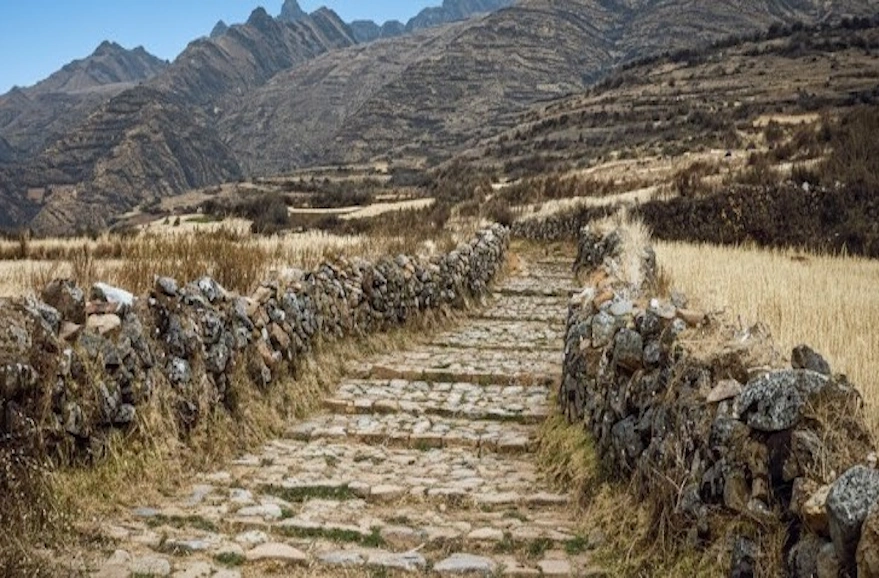
A shared heritage of outstanding universal value
Calling the Qhapaq Ñan a shared heritage of outstanding universal value is not a decorative phrase. It is an accurate description. Today it crosses Argentina, Bolivia, Chile, Colombia, Ecuador and Peru, but long before modern borders existed, the road already fulfilled its purpose of connecting distant communities.
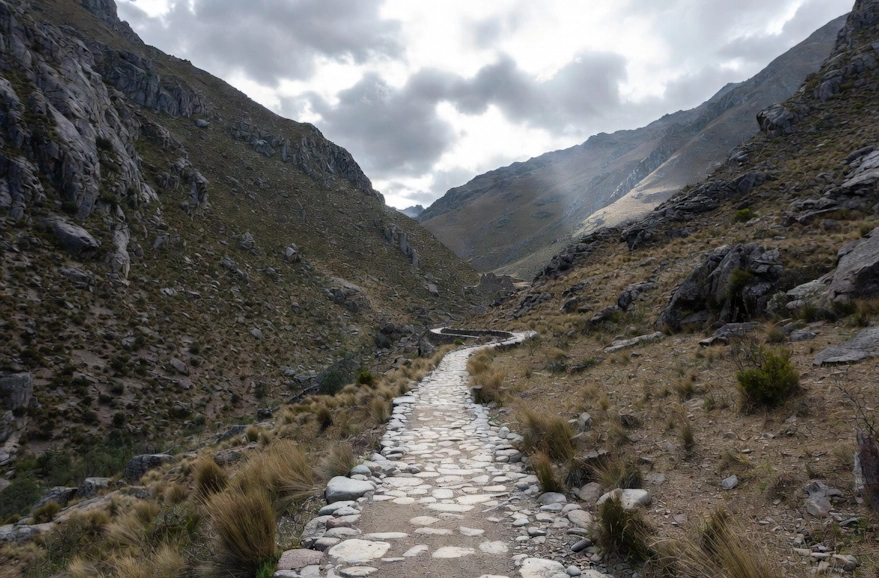
Its value is not limited to its length or technical execution. What truly stands out is the logic behind it. The road was designed to adapt to the land rather than dominate it. It follows the contours of the mountains, responds to climate and respects the terrain. This approach reveals a deep understanding of the environment and a way of inhabiting the land based on balance and knowledge.
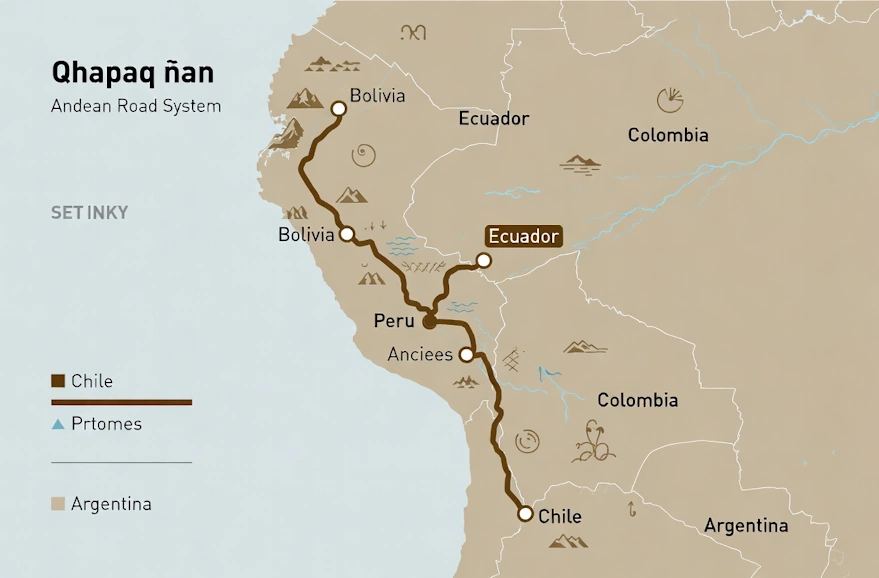
The backbone of the Inca Empire
The backbone of the Inca Empire rested on the Qhapaq Ñan as a stable and reliable structure. From Cusco, the political and symbolic center of the Tahuantinsuyo, the roads extended toward very different regions, allowing an enormous territory to function as a connected whole.
Through this network, food, raw materials and people moved where they were needed. Messages traveled quickly, decisions reached distant regions and the system remained active. The chasquis ran along the road, while tambos offered rest and supplies. The road was not a secondary element of power. It was one of its foundations.
A work built in record time
It is still striking to realize that a network as extensive as the Qhapaq Ñan was consolidated in less than a century. Without modern machinery or digital tools, the Incas integrated older routes and built new sections with remarkable coherence, even in areas that remain challenging today.
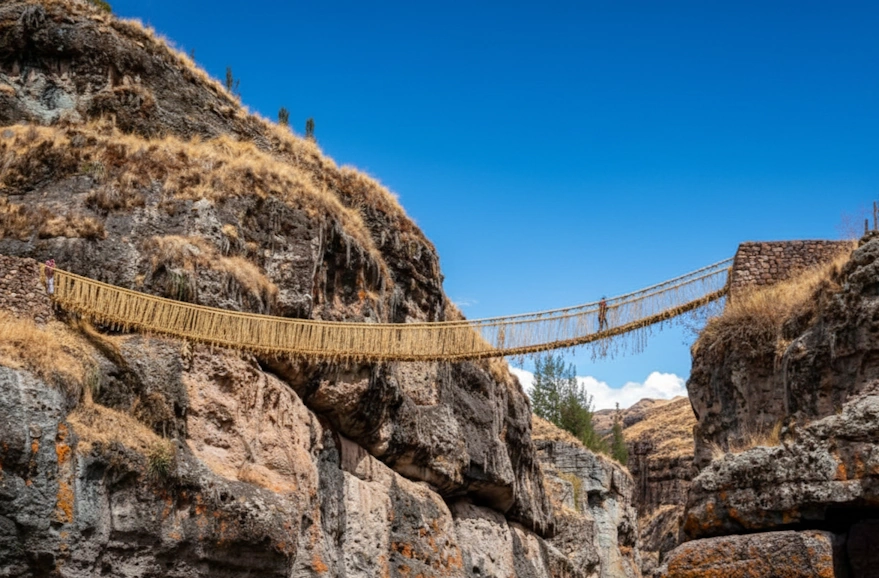
Nothing was left to chance. Collective labor and careful planning made it possible to build suspension bridges, stone stairways and solid roadbeds designed to endure. Many of these structures remain in place, quietly reminding us that thoughtful design can outlast speed.
The cultural landscape of the Qhapaq Ñan
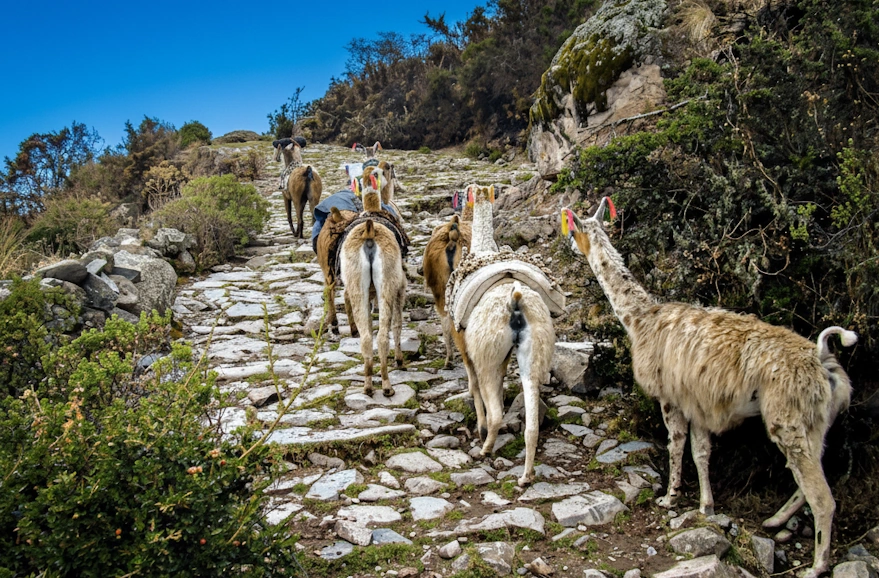
The cultural landscape of the Qhapaq Ñan cannot be understood only through archaeological sites or maps. In many regions, the road is still walked, named and remembered. It forms part of daily life for communities that have woven it into their memory and traditions.
This living character is one of its most distinctive features. The Qhapaq Ñan did not remain frozen in the past. It survives through oral stories, rituals, festivities and ways of relating to the land. It is a road that continues to speak to those who know it.
The World Heritage nomination process
The World Heritage nomination process of the Qhapaq Ñan was neither quick nor straightforward. It began with individual initiatives and gradually evolved into a shared project. Six countries came to understand that the true value of the road lay in recognizing it as a unified whole.
The coordination led by UNESCO helped structure this collective effort. Beyond technical reports, the process emphasized the human dimension of the road, its continued use and the close relationship between the Qhapaq Ñan and the communities that live along it.}
Unprecedented regional cooperation
The unprecedented regional cooperation surrounding the Qhapaq Ñan marked a turning point. Institutions, specialists and local communities worked together toward a common goal, something rarely achieved at this scale.
This collaborative approach made it possible to build lasting agreements and a shared vision for heritage management. It also left a clear lesson: when cultural heritage crosses territories and cultures, its protection can only succeed through cooperation and mutual respect.
Main achievements of the project
Among the main achievements of the project was the active participation of hundreds of people from different disciplines and countries. Thousands of kilometers of road were documented, and shared tools were developed to record and analyze associated sites.
One of the most meaningful contributions was the inclusion of oral history. Listening to local voices made it clear that the Qhapaq Ñan is not only stone and alignment, but also memory, experience and knowledge passed down through generations.
A legacy that connects past present and future
The Qhapaq Ñan is a legacy that connects past present and future in a natural way. It reflects what ancient Andean societies achieved and shows how their knowledge still resonates today.
Its recognition as a World Heritage Site does not aim to freeze the road in time. Instead, it seeks to protect it so that it can continue to function as a space of memory, learning and encounter for future generations.
Conclusion
The Qhapaq Ñan Andean Main Road does not need embellishment to justify its importance. Its scale, endurance and ongoing meaning for nearby communities speak for themselves. It is a collective work built with patience, knowledge and long term vision.
As long as the road continues to be walked, remembered and valued, it will keep fulfilling its original purpose. Not only connecting places, but also linking people, time and ways of understanding the world.
Frequently asked questions about the Qhapaq Ñan
What is the Qhapaq Ñan Andean Main Road
It is an extensive network of Andean roads developed mainly during the Inca period, designed to integrate territories, communities and productive systems on a continental scale.
How many countries share the Qhapaq Ñan
Today the Qhapaq Ñan crosses Argentina, Bolivia, Chile, Colombia, Ecuador and Peru, making it a shared cultural heritage.
Why was the Qhapaq Ñan declared World Heritage
Because it represents an exceptional example of territorial organization, adaptation to the natural environment and cultural continuity across the Andes.
Is the Qhapaq Ñan still used today
Yes. In several sections it continues to be used by local communities and retains an active cultural role.
What does the Qhapaq Ñan represent today
It represents memory, identity and a clear lesson about cooperation, respect for nature and collective work.