




 English
 Español
Celebrating New Year in Cusco is an experience where living history, collective energy and a unique atmosphere come together in every corner of the city. Many people arrive drawn by the mix of Andean rituals, local customs and the charm of a place that breathes culture in every street.
Before we continue, I invite you to explore this journey through New Year in Cusco, its origins, its different ways of celebration and the details that make its traditions so special. Here you will learn about its history, the variations of the celebration, cultural secrets and how this festivity has grown beyond its origin to become known internationally. Keep reading and discover why this date carries such a meaningful spirit in the city.
How New Year’s festivities are experienced in Cusco
New Year’s festivities in Cusco bring together both travelers and locals in a celebration filled with joy, rituals and a deep sense of renewal. The city becomes vibrant with color, music and constant movement that marks the closing of one cycle and the beginning of another. Each neighborhood adds its own touch, and the streets of the historic center naturally become the meeting point for many.
Anyone who chooses to spend New Year in Cusco quickly notices how the atmosphere becomes more intense as midnight approaches. Families, friends and visitors gather in shared spaces to welcome the new year with the kind of energy only an ancestral city can transmit. The presence of traditions and New Year customs gives the celebration a distinct identity.
The Plaza de Armas during New Year’s Eve
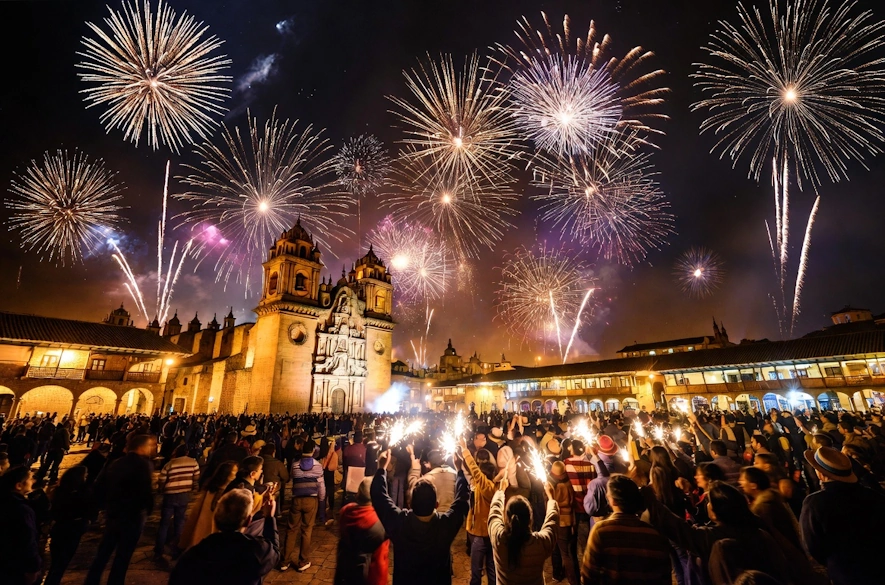
The Plaza de Armas during New Year in Cusco is one of the most iconic settings of the celebration. Hours before midnight, the square fills with people preparing for local rituals. The music, the colors and the lights create the atmosphere that surrounds the heart of the historic center.
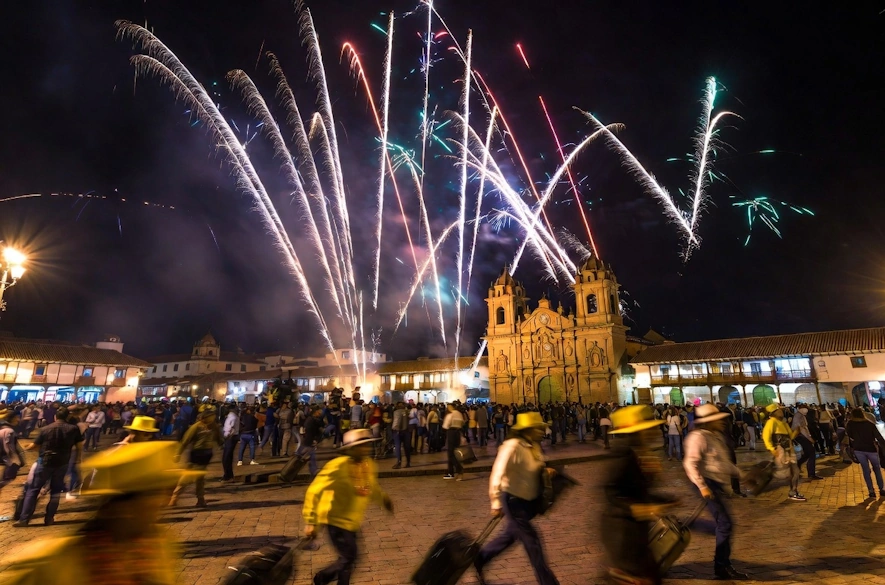
When midnight arrives, one of the most popular traditions begins as people run around the square as a symbol of movement, change and prosperity. This moment is a blend of emotion and collective joy, and the circles around the plaza represent the intention to move forward and leave behind what already served its purpose.
New Year traditions and customs in Cusco
New Year traditions and customs in Cusco have Andean roots and carry symbolism connected to renewal and abundance. Each custom is performed with a specific purpose and has been passed down through generations.
Below are the most important traditions and what they represent:
Wearing the color yellow
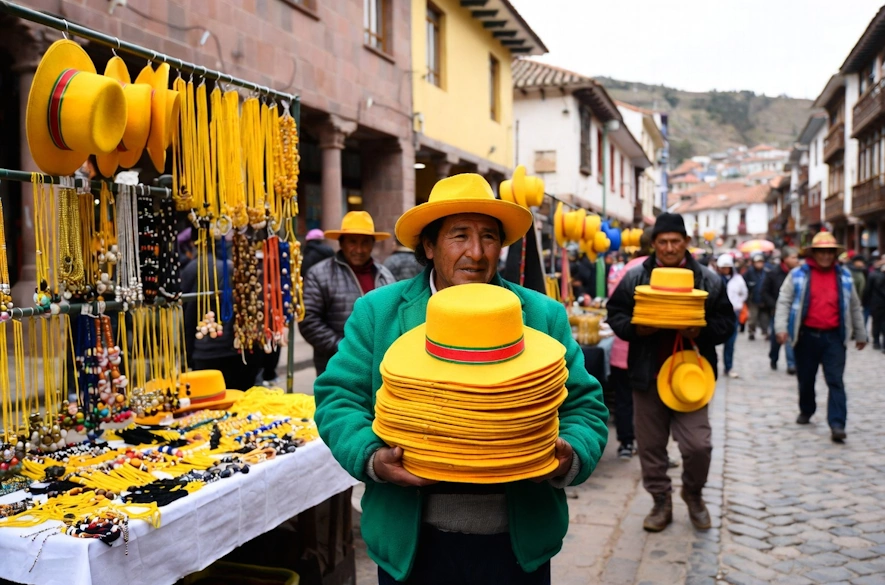
Yellow is one of the most recognizable symbols during New Year in Cusco. It represents good energy, fortune and vitality. Many people wear yellow clothing while others decorate their homes with yellow ribbons or flowers. The belief is that this color attracts prosperity for the year ahead.
It is also common to see yellow accessories and decorations in local shops around the center. The color has become a seasonal emblem associated with positive beginnings.
Running around the Plaza de Armas
This is one of the best-known customs. People run around the Plaza de Armas right after midnight to attract travel and movement in the upcoming year. Tradition says that completing several laps helps open paths and opportunities.
The atmosphere becomes filled with laughter and excitement as hundreds of people run around the square at the same time, making it a symbolic yet joyful moment.
Energy cleansing and Andean rituals
Many families perform an energy cleansing at home before the new year. Andean plants such as rue or rosemary are used to clear negative energy and invite harmony. Some people also make symbolic offerings to the earth as an act of gratitude to Pachamama.
These customs reflect the spiritual connection the region maintains with its ancestral heritage. Rituals may be done at home or within communities that keep these practices alive.
Burning the year-old dolls
These dolls represent the closing of the cycle and the farewell to anything negative. They are made from old clothing or paper and are burned at midnight. While this tradition exists in other regions too, in Cusco it takes on special meaning when combined with Andean elements.
The burning symbolizes purification and making space for new energy. Many write down things they want to leave behind and burn the papers with the doll.
Writing wishes and small offerings
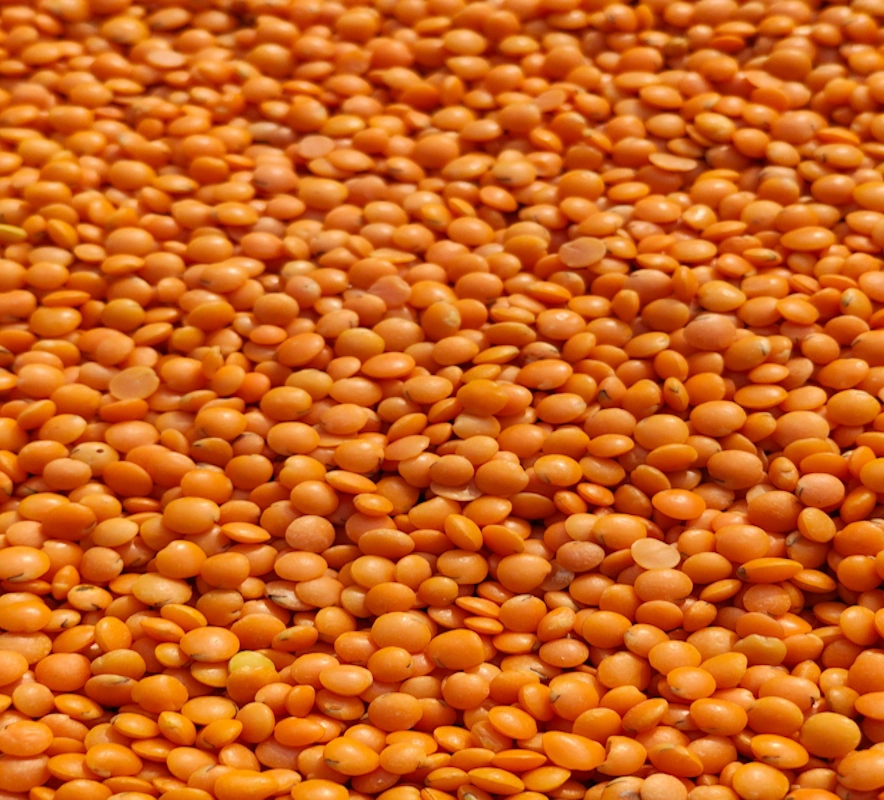
Another tradition consists of writing goals or wishes for the new year and placing them in a small envelope. Some people add offerings such as corn kernels or lentils seeds which symbolize abundance.
This gesture expresses intention and helps people stay focused on their goals throughout the year.
New Year celebrations in Cusco’s neighborhoods
Beyond the festivities in the center, Cusco’s neighborhoods celebrate in their own ways. Families gather to share dinner, music and moments of gratitude. Local food traditions also play an important role.
Family unity is deeply valued and forms the heart of the celebration.
What makes spending New Year in Cusco special
Spending New Year in Cusco is not only about observing traditions but becoming part of them. The city offers an environment where history, culture and festive spirit come together in a way that feels truly unique. The weather, the landscape and the warmth of the people contribute to an atmosphere that stays in memory.
The presence of visitors from all around the world adds a multicultural touch to the celebration. Every person brings their own energy, which turns the event into something bigger than a simple calendar holiday.
Popular activities to welcome the new year
Those who travel to experience New Year’s festivities in Cusco often take part in activities that have become part of the modern celebration. These complement the ancestral rituals and allow people to enjoy the festive atmosphere from different perspectives.
Popular activities include:
- Walking through the historic center at night
- Running around the Plaza de Armas after midnight
- Buying yellow items for good luck
- Joining family gatherings or friendly get-togethers
- Participating in Andean rituals led by local communities
Each activity has its own charm and helps visitors connect with the essence of the city.
Conclusion
New Year in Cusco is more than a celebration. It is a cultural expression that blends ancient traditions with a vibrant modern spirit. The rituals, customs, and shared moments create an experience that feels special for both locals and first-time visitors. This date reflects the energy of a city that honors its past while looking toward the future with hope.