




 English
 Español
Introduction: The Sacred Space of the Andes
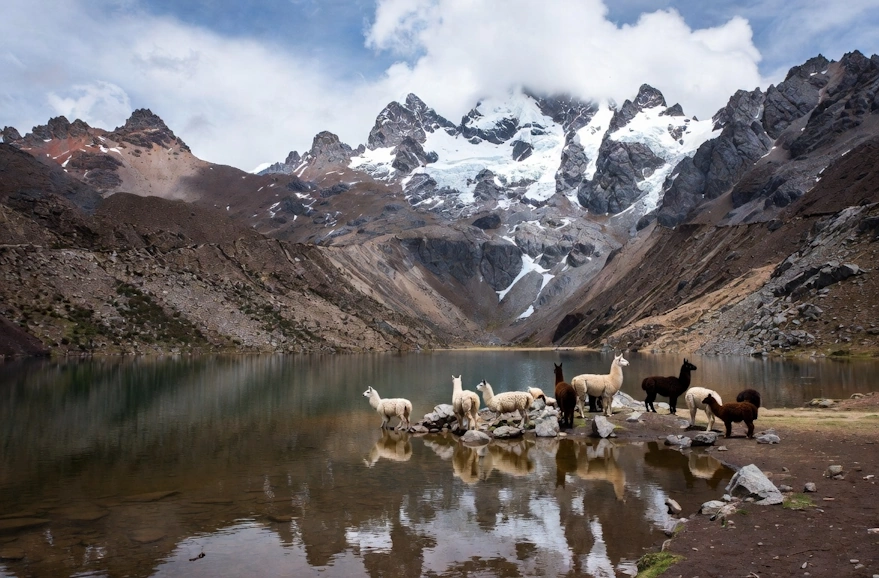
Back in 1971, Rodolfo Sánchez Garrafa did some fieldwork in the Lawramarka area, right near the massive Ausangate snow-capped peak in Cuzco, Peru. That trip really sparked his curiosity about the magical-religious world of the Andes. The whole landscape there is shaped by three big landmarks that pretty much define the sacred layout: Ausangate and Kayangate up high in the mountains, and Ocongate down in the lower valley. These three form the core axis of the mythic space.
What the Name Ausangate Really Means
People have thrown around all sorts of ideas about where "Ausangate" comes from—most of 'em without much linguistic backing. After digging deep, the Quechua origin gets tossed out, and a more solid Aymara etymology makes sense:
- Jawsa = called, invited, gathering people.
- Jatha = seed, family progenitors, ancestors.
- Kata = seed that's mostly intact after reproducing.
So Ausangate could mean "The one who calls together the family progenitors (parents)" or "gathered family (ancestors summoned)." Locals call it "Machu Ausangate" too—old man or father Ausangate—highlighting how it's seen as the main ancestor with this power to bring everyone together.
Ausangate as the Main Wak'a
Historical sources, like Cieza de León's chronicle from 1550, back this up: Auzancata (that's Ausangate) was a major temple in the Collasuyo region, with a cult that probably predates the Incas and hung on even after the Spanish showed up.
Some key traits of the deity:
- Thought of as Runa Kamaq—the giver of life, the one who breathes soul into things.
- In the myths, souls of the dead headed to a big lake near Ausangate (maybe Sivinaqocha or Singrenaqocha) before reincarnating.
- That lake acted like a Paqarina, a place of origin.
The Sacred Pantheon: Hierarchy of the Apus
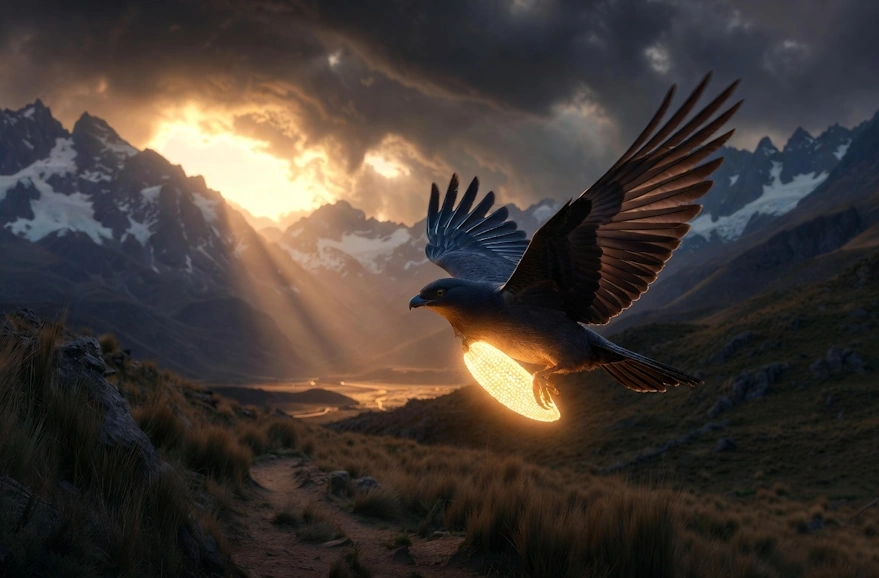
Ausangate isn't flying solo; it's at the top of a whole hierarchy of mountain gods.
Major Deities:
- Ausangate (the main progenitor)
- Kayangate (kind of its equal seed partner)
- Ausangate-Colque Cruz
- Hawaygate (seed of the descendants)
Then the "sons" of Ausangate (regional Apus):
- Parqukalla
- Parpakalli
- Sawasiray
And local Apus, specific to communities:
- Mallmay, Amayunga, Durimogo (in places like Qhofamuro and Pinchinuro)
Core Myths: The Man-God Relationship
Myth 1: The Apu Ausangate
This one's about a mythic time when peasants could talk straight to the deity:
- Shamans or mesayoq were the go-betweens.
- They'd make offerings—despachos—with wine, strong drink, coca leaves.
- Ausangate protected crops from hail and frost, and kept the animals safe.
- Break that pact? Boom—crop failures, livestock losses.
Myth 2: The River Element
Explains where water comes from:
- It flows out of lakes like Jamarcocha, from Ausangate and Kayangate.
- The peaks "gift" the water, which then gets distributed down below.
Myth 3: Apu Sawasiray and the Qolla Mariano Inkilli
This story's about how resources got split between regions:
- The Qolla son-in-law Mariano Inkilli married Tomasa Saq'apuma, Ausangate's daughter.
- He took the livestock to the Qollao (the high plateau), where it's plentiful even now.
- A bird (chiwaku) stole the spirit of the corn seed at La Raya pass.
- Corn ended up only growing well on one side of La Raya—explaining why crops and livestock are distributed the way they are geographically.
Symbolic Organization of Space
The Logic of the "Knot":
- Ausangate is part of the Vilcanota Knot, this big convergence point in the Andes.
- The suffix "-gate" or "-kata" points to gathering or concentration.
- Ausangate = "gathering from above"
- Ukungate = "gathering from below"
Geographic-Ritual Correspondences:
- Cruz de Tayankani: lower gathering (in a Lauramarca community).
- Lord of Qoyllurit'i: upper gathering (on Sinakara peak, close to Ausangate).
Ritual Mediators: The Ukukus and Their Symbolism
During the Qoyllurit'i pilgrimage:
- Ukukus—these dancers dressed as bears—climb up the sacred mountain.
- They bring back blocks of snow/ice, symbolizing that ancient water distribution.
- Uku = below, Mari = disguise, fall, roll.
- They're mediators who go through trials to claim divine gifts.
- There's a symbolic link to the fox (atoq), another mythic figure who digs irrigation channels.
Ties to Farming and Herding
The whole mythic system mirrors the region's real economy:
The Lakes as Divine Corrals:
- The qochas (high lakes) are where Ausangate keeps his herds.
- Specific entrances:
- Sura Ananta: lower entry
- Pata Ananta: upper entry/exit
- Specialized spots:
- Qollpa Ananta: where animals lick salt
- Ichu Ananta: grazing area
Ausangate's Sons as Water Givers:
- They show up as parrots, caques, or macaws.
- Hand over water to humans through irrigation ditches.
Conclusion: A Living Worldview
All this stuff analyzed shows that:
- The names (Ausangate, Kayangate, etc.) uncover symbolic structures built on kinship and summoning ideas.
- The space organized around Apu Ausangate reflects complicated links between:
- The supernatural world (deities, apus)
- Human activities (farming, herding)
- Nature (geography, water resources)
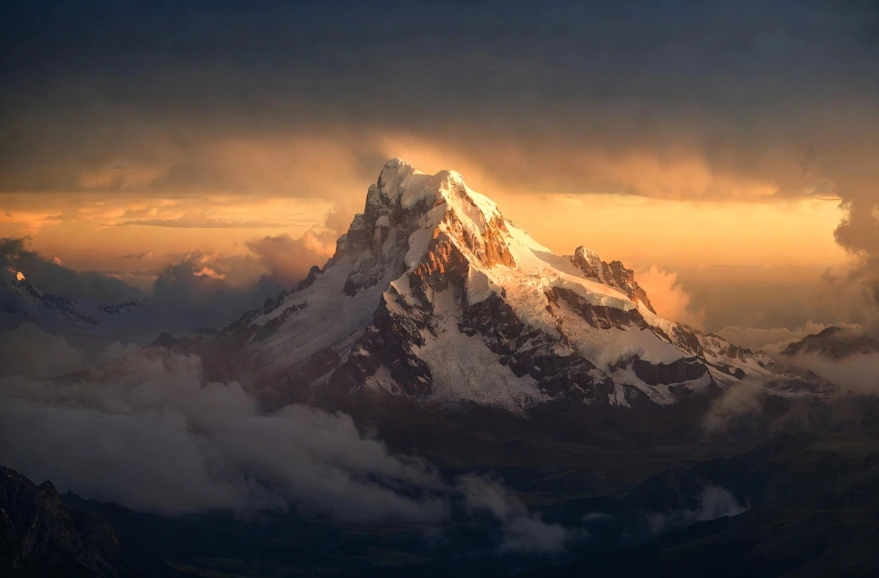
- Mythic memory is still a solid guide for Andean folks in their daily farming and pastoral life... keeping alive a cosmovision where the sacred and the everyday are all tangled up together.